
Overview
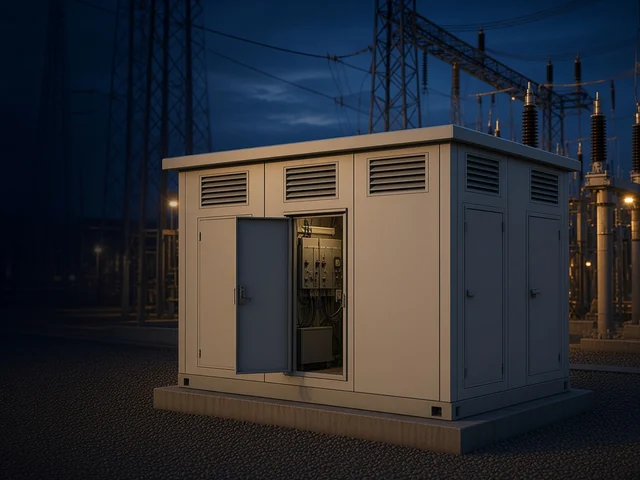
A compact substation typically brings transformer and distribution interfaces into a coordinated assembly. What is included—such as incoming switching, the transformer, outgoing distribution and enclosure—depends on the agreed project scope. The term does not establish a fixed package, voltage class, footprint or switchgear arrangement.
Typical applications and industries
The following are general duty contexts to discuss, not a list of OSTL customer installations or a guarantee of suitability for every site.
- Industrial sites coordinating transformer and distribution equipment within a defined installation area.
- Commercial developments and campuses with a planned electrical distribution scheme.
- Renewable or infrastructure sites where a compact assembly is specified by the electrical designer.
- Projects where access, siting, interfaces and responsibility boundaries need to be reviewed together.
Define the operating duty
Provide the single-line diagram, incoming/outgoing supply arrangement, site layout, load schedule and protection requirements. Define which equipment is included, the transformer type, utility interfaces and civil/site responsibilities. A compact layout does not remove clearance, ventilation, maintenance-access or safety obligations.
General construction considerations
These are design topics, not fixed features promised for every supplied unit. Confirm the construction in the project-specific offer.
- Transformer, switching/distribution interfaces and enclosure layout coordinated to the specified scope.
- Cable entry, earthing, interlocks and operator/maintenance access discussed with the site designer.
- Ventilation, heat rejection and environmental exposure assessed for the chosen equipment.
- Protection, metering, monitoring and accessories included only as agreed in the offer.
Ratings and scope
Ratings as per project requirement. Confirm the ratings for the proposed assembly and its components. Do not apply a transformer MVA/kV limit to switchgear, panels or a complete substation assembly. No panel current, fault rating, enclosure class or substation voltage range is published here.
BIS, ISO and project-specific documentation
OSTL has held BIS licences in all five major transformer categories since 2020. This is a company credential, not a blanket BIS certification claim for this product line. Ask for the exact licence scope and the standards and documentation applicable to the proposed equipment.
OSTL is ISO 9001:2015, ISO 14001:2015 and ISO 45001:2018 certified; copies available on request. Management-system certification does not establish a particular product rating, enclosure class, efficiency level or test approval. Agree the technical requirements and supporting records in the written offer.
Related equipment and project context
Send a clearer quotation brief
Contact the Kolkata corporate office with the equipment category, duty, rating required, supply/interface voltages, quantity, site conditions and requested dispatch destination. Unknown items can be marked for technical discussion; do not assume a standard configuration.
Landline: 033 4061 3200 · ostltd@hotmail.com. The quotation checklist can help organise the brief.
Frequently asked questions
Is a compact substation a fixed standard package?
No. The equipment included, transformer type, enclosure, switching arrangement and interfaces are defined by the agreed project scope.
What ratings are available?
Ratings are as per project requirement. Transformer, switchgear and panel ratings must be confirmed separately; the overall transformer range is not a complete substation rating.
Is a particular enclosure or internal-arc class confirmed?
No particular enclosure, protection class or internal-arc classification is claimed here. Provide the applicable requirements and request product-specific evidence.
Are civil work and site installation included?
Do not assume they are. Define the equipment supply, transport, handling, civil works and site responsibilities explicitly in the written scope.